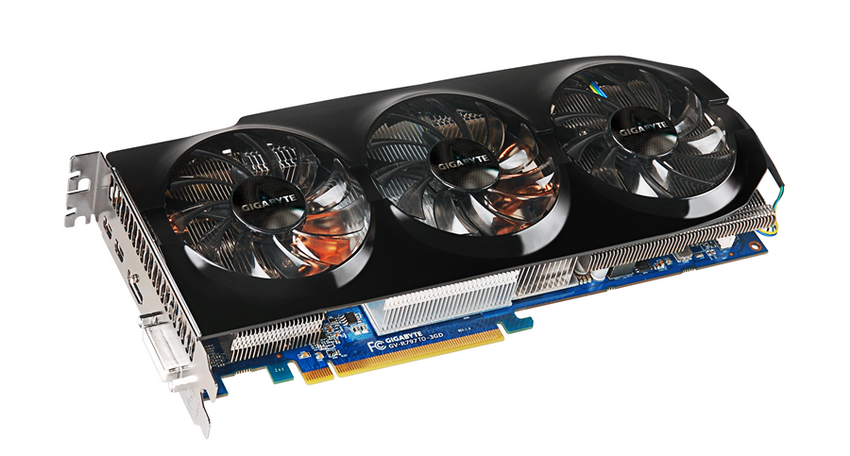

Graphics cards, often referred to as VGA cards due to their historical association with the Video Graphics Array standard, are integral components in modern computing. These devices are responsible for rendering images, videos, and graphical user interfaces on computer monitors, and they have undergone significant evolution since their inception.
The earliest graphics cards were rudimentary, focusing primarily on displaying text and simple graphics in monochrome or basic color palettes. As computing power advanced, so too did the capabilities of graphics cards. The introduction of VGA in 1987 by IBM marked a milestone, offering higher resolution and more vibrant colors compared to its predecessors. VGA cards quickly became standard in personal computers, setting a foundation for graphical computing as we know it today.
Throughout the 1990s and early 2000s, graphics cards saw rapid development driven by advancements in 3D graphics rendering. Companies like NVIDIA and ATI (now AMD) emerged as leaders in the field, pushing the boundaries of performance and visual fidelity. These advancements were fueled by innovations such as dedicated graphics processing units (GPUs), which offloaded graphics rendering tasks from the CPU to specialized hardware optimized for parallel processing.
The late 2000s brought about a new era with the advent of unified shader architectures and programmable GPUs. This allowed developers to create more complex and realistic graphics effects, leading to significant improvements in gaming, multimedia, and professional applications. Games became more immersive with lifelike textures, realistic lighting, and sophisticated physics simulations, all made possible by increasingly powerful graphics cards.
Today, graphics cards continue to evolve at a rapid pace. The focus has shifted towards ray tracing, a rendering technique that simulates the behavior of light to create incredibly realistic visuals. Ray tracing, once considered too computationally expensive for real-time applications, has been made feasible by dedicated hardware support in modern GPUs.
Moreover, the role of graphics cards has expanded beyond gaming and entertainment. They are essential for tasks such as scientific simulations, artificial intelligence, and cryptocurrency mining, leveraging their parallel processing capabilities for complex computations.
Looking ahead, the future of graphics cards appears poised for further innovation. Advances in AI and machine learning are driving new applications, while technologies like virtual reality and augmented reality demand even greater rendering performance and efficiency.
In conclusion, graphics cards have come a long way from their humble beginnings as VGA cards. They have transformed computing by enabling richer visuals, powering immersive experiences, and accelerating computational tasks. As technology continues to advance, graphics cards will undoubtedly remain at the forefront of innovation, shaping the digital experiences of tomorrow.