
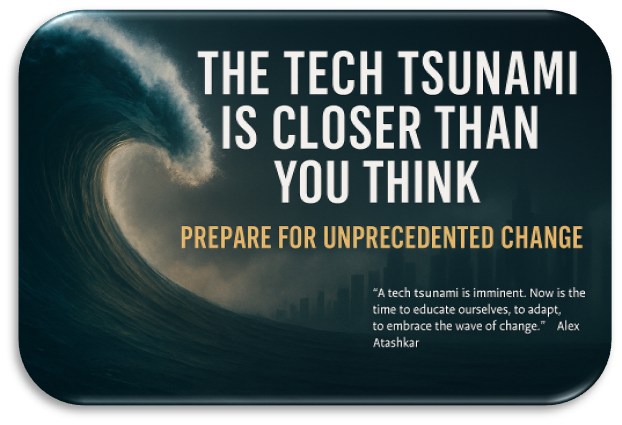
Tech’s Tsunami: Are You Ready to Drown or Surf?
Introduction
The air crackles with it. A hum of innovation, a relentless surge of new technologies crashing against the shores of our professional lives. It’s undeniable: we’re in the midst of a tech tsunami. Are you feeling the exhilarating rush, ready to carve your path on the crest of the wave? Or are you bracing yourself, hoping to simply stay afloat as the deluge threatens to overwhelm you?
Let’s be honest, the sheer speed of technological advancement can be dizzying. One minute you’re mastering a new software, the next it’s already obsolete. AI, automation, blockchain, the metaverse – the buzzwords alone can induce a headache. It’s easy to feel lost in the whitecaps. But ignoring this tsunami isn’t an option. The choice isn’t about avoiding the wave, but rather learning how to ride it.
The Short-Term Rip Current: Immediate Impacts You Can’t Ignore
The immediate impact of this tech surge is already being felt across industries. Jobs are evolving, requiring new skills and competencies. Companies are scrambling to adopt new technologies, often leaving employees playing catch-up. Think about customer service: chatbots and AI-powered assistants are rapidly changing how we interact with businesses, potentially reducing the need for traditional call centers. This shift necessitates retraining and upskilling customer service professionals to handle more complex inquiries and personalized interactions.
Another short-term challenge is the pressure to constantly be “on.” The proliferation of remote work and digital communication tools has blurred the lines between personal and professional life. Emails, notifications, and instant messages relentlessly demand our attention, leading to burnout and decreased productivity.
The Long-Term Swell: Transformative Changes on the Horizon
Looking further out, the potential impact is even more profound. Entire industries could be reshaped by automation and AI. Consider manufacturing: robots are already performing repetitive tasks with greater efficiency and accuracy than humans. This trend will only accelerate, potentially leading to significant job displacement.
Beyond specific industries, the very nature of work is likely to change. The rise of the gig economy, fueled by digital platforms, will continue to reshape the traditional employer-employee relationship. We can expect to see more project-based work, increased reliance on freelance talent, and a greater emphasis on adaptability and lifelong learning.
Furthermore, ethical considerations surrounding AI and data privacy will become increasingly important. As AI systems become more sophisticated, we need to grapple with questions of bias, accountability, and transparency. Who is responsible when an AI makes a mistake? How do we ensure that AI algorithms are fair and unbiased? These are complex questions with no easy answers.
Surf’s Up: Practical Strategies for Riding the Wave
So, how do you avoid drowning and instead learn to surf this tech tsunami? Here are some practical strategies you can implement today:
- Embrace Lifelong Learning: This isn’t just about attending a conference or taking a course once a year. It’s about cultivating a mindset of continuous learning and exploration. Identify the skills and technologies that are relevant to your field and actively seek opportunities to develop them. Platforms like Coursera, edX, and Udemy offer a wide range of online courses that can help you stay ahead of the curve. Example: A marketing professional might take a course on AI-powered marketing automation to learn how to leverage these tools to improve campaign performance.
- Network and Collaborate: Don’t try to navigate this complex landscape alone. Connect with other professionals in your field, attend industry events, and participate in online communities. Collaboration can help you learn from others, share best practices, and identify emerging trends. Example: Joining a LinkedIn group focused on cybersecurity can provide valuable insights into the latest threats and vulnerabilities, as well as opportunities to connect with other security professionals.
- Develop “Soft Skills”: While technical skills are essential, don’t underestimate the importance of “soft skills” such as communication, critical thinking, problem-solving, and creativity. These skills are becoming increasingly valuable in a world where technology is constantly changing. Example: A software developer with strong communication skills will be better able to collaborate with team members, explain technical concepts to non-technical stakeholders, and effectively communicate the value of their work.
- Experiment and Innovate: Don’t be afraid to experiment with new technologies and approaches. Look for opportunities to pilot new projects, test new tools, and challenge the status quo. Innovation is not just about creating new products or services; it’s about finding new ways to solve problems and improve efficiency. Example: A small business owner might experiment with using social media marketing to reach new customers or try implementing a new CRM system to improve customer relationship management.
- Focus on Value Creation: Remember that technology is a tool, not an end in itself. Focus on how you can use technology to create value for your organization, your customers, and yourself. What problems can you solve? What needs can you meet? By focusing on value creation, you can ensure that your efforts are aligned with the overall goals of your organization. Example: A data analyst might use data visualization tools to identify trends and patterns that can help a company make better business decisions.
Not every approach will work for everyone. Here are a few alternative approaches to consider:
- The Specialist Route: Become a deep expert in a specific niche. Instead of trying to master everything, focus on developing advanced expertise in a particular area. This can make you highly valuable and sought-after in the job market. Example: A developer focusing solely on AI-powered cybersecurity.
- The Generalist Route: Embrace a broader skillset and become a “T-shaped” professional. Develop a basic understanding of a wide range of technologies and skills, with deep expertise in one or two key areas. This can make you adaptable and versatile in a rapidly changing environment. Example: A project manager who understands the basics of software development, data analytics, and marketing.
- The Entrepreneurial Route: Identify opportunities to create new products, services, or businesses that leverage emerging technologies. This can be a risky but potentially rewarding path. Example: Creating an app that utilizes AI to personalize learning experiences for students.
Conclusion
The tech tsunami is not something to fear, but rather an opportunity to learn, grow, and thrive. By embracing lifelong learning, developing essential skills, and focusing on value creation, you can position yourself for success in the digital age. It won’t always be easy. There will be setbacks, challenges, and moments of doubt. But by staying curious, adaptable, and resilient, you can ride the wave to a brighter future. The water is churning, but the view from the surfboard is incredible. Are you ready to paddle out?
