
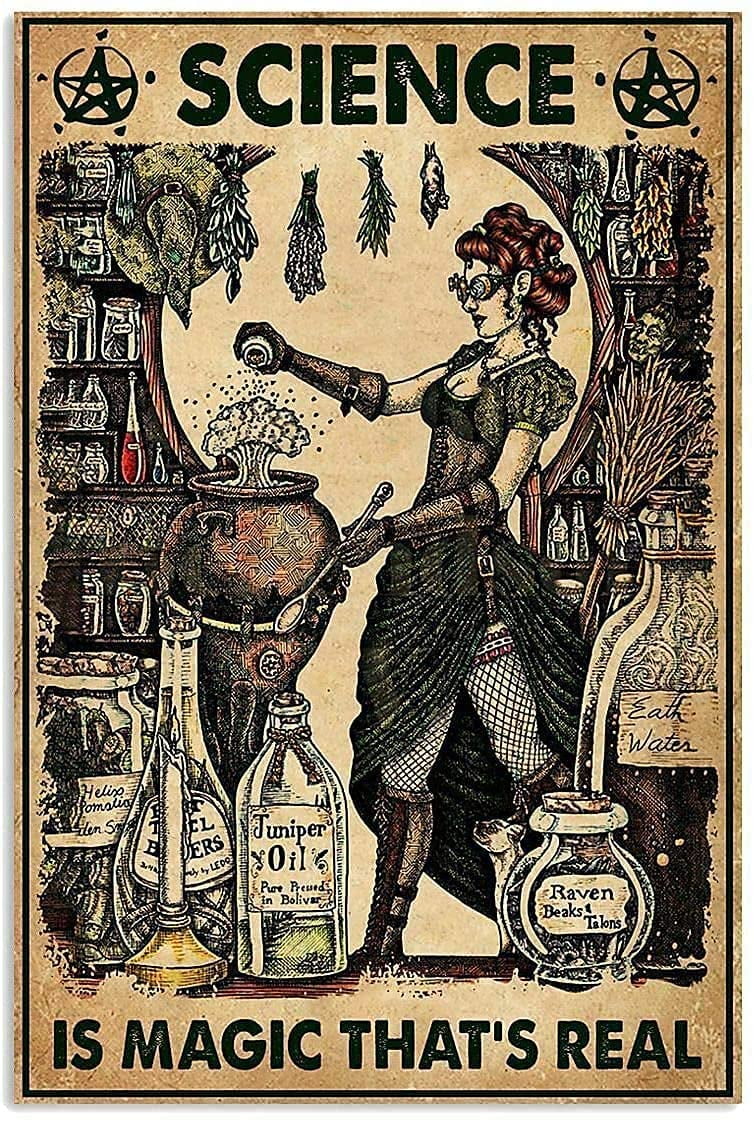
Science:The Only Magic That’s Real
Introduction
Remember being a kid,eyes wide with wonder,convinced that anything was possible?We believed in Santa Claus,tooth fairies,and genies granting wishes.As we grew older,most of that magic faded,replaced by the “real world”–a world supposedly governed by cold,hard facts.But what if I told you that magic wasn’t gone,just transformed?What if the real magic was actually all around us,woven into the very fabric of our existence?That magic,my friends,is science.
Think about it.A tiny seed holds the blueprint for a towering tree.A complex network of wires and silicon lets us communicate with someone across the globe in real-time.We can even peer billions of years into the past,observing the echoes of the Big Bang.If that’s not magic,I don’t know what is.
But this isn’t just about appreciating the awe-inspiring feats of science.It’s about understanding its power,its potential,and its crucial role in shaping our future.Because,just like any powerful force,science can be used for good or ill.And right now,we’re at a critical juncture.
The Price of Neglecting the Magic:Short-Term Headaches and Long-Term Nightmares
When we turn our backs on scientific understanding,or worse,actively reject it,we don’t just stifle progress.We invite problems,both in the immediate future and generations down the line.
In the short term,ignoring science leads to misinformed decisions about our health.Look at the recent rise of misinformation surrounding vaccines.Fear and distrust,fueled by unsubstantiated claims,have resulted in declining vaccination rates,putting communities at risk of preventable diseases.The consequences are tangible:outbreaks of measles,whooping cough,and other illnesses that were once nearly eradicated.This is the immediate cost of dismissing scientific consensus–compromised health and increased vulnerability.
Beyond health,neglecting science hinders our economic growth.Industries dependent on innovation stagnate.We fall behind in the global race to develop new technologies.Think about the renewable energy sector.Resistance to scientific findings on climate change has slowed the adoption of sustainable energy sources,hindering the growth of a potentially booming industry and leaving us reliant on finite,polluting fossil fuels.This translates to missed economic opportunities,higher energy costs,and a compromised competitive edge.
But the long-term consequences are far more daunting.Climate change,fueled by our collective inaction on scientific findings,threatens to reshape our planet in unimaginable ways.Rising sea levels,extreme weather events,food shortages,and mass migrations are not hypothetical scenarios;they are already happening,disproportionately impacting vulnerable communities.This isn’t just about future generations;it’s about the world we are leaving for our children and grandchildren.
The long-term implications extend beyond environmental catastrophes.A decline in scientific literacy weakens our ability to critically evaluate information,making us more susceptible to manipulation and propaganda.It hinders our capacity to address complex global challenges,from antibiotic resistance to resource scarcity.A society that rejects science is a society that is ill-equipped to navigate the future.
Reclaiming the Magic:Practical Solutions for a Brighter Future
So,how do we reclaim the magic of science?How do we foster a culture of scientific curiosity,critical thinking,and evidence-based decision-making?It starts with a multi-pronged approach that focuses on education,communication,and engagement.
Here are some practical solutions we can implement:
- Invest in Science Education,Starting Early:The foundation of scientific literacy is laid in childhood.We need to prioritize science education in schools,making it engaging,hands-on,and relevant to students’ lives.This means moving beyond rote memorization and encouraging critical thinking,problem-solving,and experimentation.Programs like citizen science initiatives,where students participate in real scientific research,can be incredibly effective in sparking their interest and fostering a sense of ownership.For example,GLOBE Program involves students in collecting environmental data that is used by scientists worldwide.
- Improve Science Communication:Scientists need to be better communicators,capable of explaining complex concepts in a clear,concise,and engaging way.This means avoiding jargon,using relatable examples,and actively engaging with the public through social media,public lectures,and community events.Organizations like the Alan Alda Center for Communicating Science offer training programs to help scientists hone their communication skills.We also need to support science journalists and media outlets that prioritize accurate and evidence-based reporting.
- Combat Misinformation and Promote Critical Thinking:In the age of social media,misinformation spreads like wildfire.We need to equip individuals with the tools to critically evaluate information,identify biases,and distinguish between credible sources and unreliable ones.This includes promoting media literacy programs in schools and supporting initiatives that fact-check claims and debunk myths.For example,organizations like Snopes and PolitiFact provide reliable fact-checking services.
- Support Scientific Research and Innovation:Scientific progress requires sustained investment in research and development.We need to advocate for increased funding for scientific research,both in academia and in the private sector.This includes supporting basic research,which lays the foundation for future breakthroughs,as well as applied research,which translates scientific discoveries into practical applications.Countries like South Korea and Israel,which invest heavily in research and development,have seen significant economic and technological advancements.
- Embrace Citizen Science and Community Engagement:Science shouldn’t be confined to laboratories and universities.We need to create opportunities for the public to participate in scientific research and learn about science in their communities.Citizen science projects,such as collecting data on bird populations or monitoring water quality,empower individuals to contribute to scientific knowledge and gain a deeper understanding of the scientific process.Science museums,libraries,and community centers can also play a vital role in promoting science literacy through exhibits,workshops,and outreach programs.
Alternative Approaches:Tailoring Solutions to Specific Contexts
While these solutions are broadly applicable,it’s important to recognize that different communities and contexts may require tailored approaches.For example,in regions with limited access to technology,radio programs and community meetings can be effective ways to disseminate scientific information.In areas with high levels of distrust in government institutions,building partnerships with trusted community leaders and organizations can help bridge the gap.
One alternative approach is to frame scientific information in terms that resonate with local values and concerns.For example,when discussing climate change,emphasizing the impact on local agriculture or water resources may be more effective than focusing on abstract global trends.
Another approach is to leverage the power of storytelling.Sharing personal stories of individuals who have been affected by scientific advancements or who have overcome challenges through scientific innovation can be a powerful way to connect with audiences on an emotional level and inspire them to embrace science.
The Future is Ours to Create
Science is not just a body of knowledge;it’s a way of thinking,a process of inquiry,and a powerful tool for shaping our future.By embracing scientific literacy,promoting critical thinking,and investing in research and innovation,we can unlock the magic of science and create a world that is healthier,more sustainable,and more equitable.
The challenges we face are daunting,but they are not insurmountable.We have the knowledge,the tools,and the ingenuity to overcome them.What we need now is the will to act.Let’s rediscover the wonder of science,not as a childhood fantasy,but as a powerful force for positive change.Let’s harness its magic to build a brighter future for ourselves and for generations to come.The power is within us.Let’s use it wisely.
